Kdo chodil s Romaine Brooks?
Natalie Clifford Barneyová datováno Romaine Brooks od ? do ?. Věkový rozdíl byl 2 roky, 5 měsíců a 30 dny.
Ida Rubinstein datováno Romaine Brooks od ? do ?. Věkový rozdíl byl 9 roky, 5 měsíců a 2 dny.
Romaine Brooks
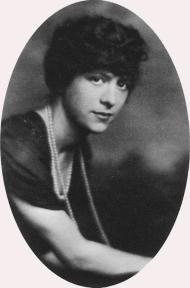
Romaine Brooks (born Beatrice Romaine Goddard; May 1, 1874 – December 7, 1970) was an American painter who worked mostly in Paris and Capri. She specialized in portraiture and used a subdued tonal palette keyed to the color gray. Brooks ignored contemporary artistic trends such as Cubism and Fauvism, drawing on her own original aesthetic inspired by the works of Charles Conder, Walter Sickert, and James McNeill Whistler. Her subjects ranged from anonymous models to titled aristocrats. She is best known for her images of women in androgynous or masculine dress, including her self-portrait of 1923, which is her most widely reproduced work.
Although her family was wealthy, Brooks had an unhappy childhood after her alcoholic father abandoned the family; her mother was emotionally abusive and her brother mentally ill. By her own account, her childhood cast a shadow over her whole life. She spent several years in Italy and France as a poor art student, then inherited a fortune upon her mother's death in 1902. Wealth gave her the freedom to choose her own subjects. She often painted people close to her, such as the Italian writer and politician Gabriele D'Annunzio, the Russian dancer Ida Rubinstein, and her partner of more than 50 years, the writer Natalie Barney.
Although she lived until 1970, it is erroneously believed that she painted very little after 1925 despite evidence to the contrary. She made a series of drawings during the 1930s, using an "unpremeditated" techniques predating automatic drawing. She spent time in New York City in the mid 1930s, completing portraits of Carl Van Vechten and Muriel Draper. Many of her works are unaccounted for, but photographic reproductions attest to her ongoing artwork. It is thought to have culminated in her 1961 portrait of Duke Uberto Strozzi.
Přečtěte si více...Natalie Clifford Barneyová

Natalie Clifford Barney (October 31, 1876 – February 2, 1972) was an American writer who hosted a literary salon at her home in Paris that brought together French and international writers. She influenced other authors through her salon and also with her poetry, plays, and epigrams, often thematically tied to her lesbianism and feminism.
Barney was born into a wealthy family. She was partly educated in France, and expressed a desire from a young age to live openly as a lesbian. She moved to France with her first romantic partner, Eva Palmer. Inspired by the work of Sappho, Barney began publishing love poems to women under her own name as early as 1900. Writing in both French and English, she supported feminism and pacifism. She opposed monogamy and had many overlapping long and short-term relationships, including on-and-off romances with poet Renée Vivien and courtesan Liane de Pougy and longer relationships with writer Élisabeth de Gramont and painter Romaine Brooks.
Barney hosted a salon at her home at 20-22 rue Jacob in the 6th arrondissement of Paris for more than 60 years, bringing together writers and artists from around the world, including many leading figures in French, American, and British literature. Attendees of various sexualities mingled comfortably at the weekly gatherings. She worked to promote writing by women and hosted a "Women's Academy" (L'Académie des Femmes) in her salon as a response to the all-male French Academy. The salon closed for the duration of World War II while Barney lived in Italy with Brooks. She initially espoused some pro-fascist views, but supported the Allies by the end of the war. After the war, she returned to Paris, resumed the salon, and continued influencing or inspiring writers such as Truman Capote.
Barney had a wide literary influence. Remy de Gourmont addressed public letters to her using the nickname l'Amazon (the Amazon), and Barney's association with both de Gourmont and the nickname lasted until her death. Her life and love affairs served as inspiration for many novels written by others, ranging from de Pougy's erotic French bestseller Idylle Saphique to Radclyffe Hall's The Well of Loneliness, the most famous lesbian novel of the twentieth century.
Přečtěte si více...Romaine Brooks
Ida Rubinstein
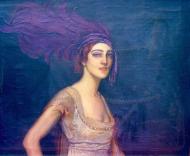
Ida Lvovna Rubinstein (Russian: Ида Львовна Рубинштейн; 3 October [O.S. 21 September] 1883 – 20 September 1960) was a Russian dancer, actress, art patron and Belle Époque figure. She performed with Sergei Diaghilev's Ballets Russes from 1909 to 1911 and later formed her own company. Boléro by Ravel (1928) was among her commissions.
Přečtěte si více...