Kdo chodil s Judith Exner?
John F. Kennedy datováno Judith Exner od ? do ?. Věkový rozdíl byl 16 roky, 7 měsíců a 13 dny.
Sam Giancana datováno Judith Exner od ? do ?. Věkový rozdíl byl 25 roky, 6 měsíců a 27 dny.
Frank Sinatra datováno Judith Exner od ? do ?. Věkový rozdíl byl 18 roky, 0 měsíců a 30 dny.
Judith Exner
Judith Exner (January 11, 1934 – September 24, 1999) was an American woman who was a mistress of U.S. Senator, then U.S. president John F. Kennedy and Mafia leaders Sam Giancana and John Roselli. Some aspects of her claim of having known Kennedy have been verified by documents, phone records, and testimony. She was also known as Judith Campbell Exner, and Judith Campbell.
Přečtěte si více...John F. Kennedy
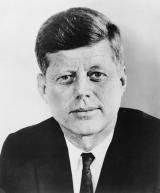
John Fitzgerald Kennedy (May 29, 1917 – November 22, 1963), also known as JFK, was the 35th president of the United States, serving from 1961 until his assassination in 1963. He was the youngest person elected president, at 43 years, and the first Catholic president. Kennedy served at the height of the Cold War, and the majority of his foreign policy concerned relations with the Soviet Union and Cuba. A member of the Democratic Party, Kennedy represented Massachusetts in both houses of the United States Congress before his presidency.
Born into the prominent Kennedy family in Brookline, Massachusetts, Kennedy graduated from Harvard University in 1940, joining the U.S. Naval Reserve the following year. During World War II, he commanded PT boats in the Pacific theater. Kennedy's survival following the sinking of PT-109 and his rescue of his fellow sailors made him a war hero and earned the Navy and Marine Corps Medal, but left him with serious injuries. After a brief stint in journalism, Kennedy represented a working-class Boston district in the U.S. House of Representatives from 1947 to 1953. He was subsequently elected to the U.S. Senate, serving as the junior senator from Massachusetts from 1953 to 1960. While in the Senate, Kennedy published his book Profiles in Courage, which won a Pulitzer Prize. Kennedy ran in the 1960 presidential election. His campaign gained momentum after the first televised presidential debates in American history, and he was elected president, narrowly defeating Republican opponent Richard Nixon, the incumbent vice president.
Kennedy's presidency saw high tensions with communist states in the Cold War. He increased the number of American military advisers in South Vietnam, and the Strategic Hamlet Program began during his presidency. In 1961, he authorized attempts to overthrow the Cuban government of Fidel Castro in the failed Bay of Pigs Invasion and Operation Mongoose. In October 1962, U.S. spy planes discovered Soviet missile bases had been deployed in Cuba. The resulting period of tensions, termed the Cuban Missile Crisis, nearly resulted in nuclear war. In August 1961, after East German troops erected the Berlin Wall, Kennedy sent an army convoy to reassure West Berliners of U.S. support, and delivered one of his most famous speeches in West Berlin in June 1963. In 1963, Kennedy signed the first nuclear weapons treaty. He presided over the establishment of the Peace Corps, Alliance for Progress with Latin America, and the continuation of the Apollo program with the goal of landing a man on the Moon before 1970. He supported the civil rights movement but was only somewhat successful in passing his New Frontier domestic policies.
On November 22, 1963, Kennedy was assassinated in Dallas. His vice president, Lyndon B. Johnson, assumed the presidency. Lee Harvey Oswald was arrested for the assassination, but he was shot and killed by Jack Ruby two days later. The Federal Bureau of Investigation (FBI) and the Warren Commission both concluded Oswald had acted alone, but conspiracy theories about the assassination persist. After Kennedy's death, Congress enacted many of his proposals, including the Civil Rights Act of 1964 and the Revenue Act of 1964. He ranks highly in polls of U.S. presidents with historians and the general public. His personal life has been the focus of considerable sustained interest following public revelations in the 1970s of his chronic health ailments and extramarital affairs. Kennedy is the most recent U.S. president to have died in office.
Přečtěte si více...Judith Exner
Sam Giancana

Salvatore "Mooney" Giancana ( JEE-ahn-KAH-nə; born Gilormo Giangana, Italian: [dʒiˈlɔrmo dʒaŋˈɡaːna]; May 24, 1908 – June 19, 1975) was an American mobster who was boss of the Chicago Outfit from 1957 to 1966.
Giancana was born in Chicago to Italian immigrant parents. He joined the 42 Gang as a teenager, developing a reputation in organized crime, which gained him the notice of the leaders of the Chicago Outfit, which he joined during the late 1930s. From the 1940s through the 1950s, he controlled illegal gambling, illegal liquor distribution, and political rackets in Louisiana. In the early 1940s, Giancana was involved in a takeover of Chicago's black American lottery payout system for the Outfit. In 1957, he became the boss of the Chicago Outfit.
According to some sources, Giancana and the Mafia were involved in John F. Kennedy's victory in the 1960 presidential election. During the 1960s, he was recruited by the Central Intelligence Agency (CIA) in a plot to assassinate Cuban leader Fidel Castro. Conspiracy theorists consider Giancana, along with Mafia leaders Santo Trafficante Jr. and Carlos Marcello, to be associated with the assassination of John F. Kennedy. In 1965, Giancana was convicted of contempt of court, serving one year in prison. After his release from prison, Giancana fled to Cuernavaca, Mexico. In 1974, he was deported to the United States, returning to Chicago. Giancana was murdered on June 19, 1975, at his home in Oak Park, Illinois, shortly before he was scheduled to appear before the Church Committee.
Přečtěte si více...Judith Exner
Frank Sinatra
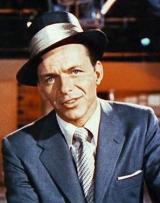
Francis Albert Sinatra, uměleckým jménem Frank Sinatra (12. prosince 1915, Hoboken – 14. května 1998, Los Angeles), byl americký popový, jazzový a swingový zpěvák, stejně jako herec, patřící k největším hvězdám populární hudby 20. století. Domovskou scénou se stala vystoupení v Las Vegas, z něhož vyrážel na americká i mezinárodní koncertní turné. Mezi hity, které zpopularizoval, se zařadily písně „Strangers in the Night“, „My Way“ či „Theme from New York, New York“.
Během své kariéry obdržel jedenáct Cen Grammy, ačkoli ocenění vzniklo v roce 1958, až po dvou vrcholech jeho nahrávací dráhy. Za roli vojína Angela Maggia v dramatu Odtud až na věčnost si odnesl Oscara za nejlepší mužský herecký výkon ve vedlejší roli i Zlatý glóbus ve stejné kategorii. Snímek Přítel Joey znamenal zisk Zlatého glóbu za nejlepší výkon v komedii či muzikálu.
V roce 1985 mu Ronald Reagan udělil Prezidentskou medaili svobody. O dvanáct let později získal nejvyšší státní vyznamenání Zlatou medaili Kongresu. Po úmrtí jej americký hudební kritik Robert Christgau označil za „největšího zpěváka 20. století.“ Vnímán je jako jedna z ikonických postav.
Přečtěte si více...