Kdo chodil s Cleopatra VII?
Julius Caesar datováno Cleopatra VII od ? do ?. Věkový rozdíl byl 30 roky, 6 měsíců a 10 dny.
Gnaeus Pompeius Magnus datováno Cleopatra VII od ? do ?.
Cleopatra VII
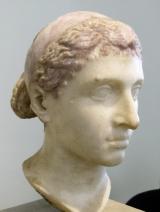
Cleopatra VII Thea Philopator (Koine Greek: Κλεοπάτρα Θεά Φιλοπάτωρ, lit. 'Cleopatra father-loving goddess'; 70/69 BC – 10 or 12 August 30 BC) was Queen of the Ptolemaic Kingdom of Egypt from 51 to 30 BC, and the last active Hellenistic pharaoh. A member of the Ptolemaic dynasty, she was a descendant of its founder Ptolemy I Soter, a Macedonian Greek general and companion of Alexander the Great. Her first language was Koine Greek, and she is the only Ptolemaic ruler known to have learned the Egyptian language, among several others. After her death, Egypt became a province of the Roman Empire, marking the end of the Hellenistic period in the Mediterranean, which had begun during the reign of Alexander (336–323 BC).
Born in Alexandria, Cleopatra was the daughter of Ptolemy XII Auletes, who named her his heir before his death in 51 BC. Cleopatra began her reign alongside her brother Ptolemy XIII, but falling-out between them led to a civil war. Roman statesman Pompey fled to Egypt after losing the 48 BC Battle of Pharsalus against his rival Julius Caesar, the Roman dictator, in Caesar's civil war. Pompey had been a political ally of Ptolemy XII, but Ptolemy XIII had him ambushed and killed before Caesar arrived and occupied Alexandria. Caesar then attempted to reconcile the rival Ptolemaic siblings, but Ptolemy XIII's forces besieged Cleopatra and Caesar at the palace. Shortly after the siege was lifted by reinforcements, Ptolemy XIII died in the Battle of the Nile. Caesar declared Cleopatra and her brother Ptolemy XIV joint rulers, and maintained a private affair with Cleopatra which produced a son, Caesarion. Cleopatra traveled to Rome as a client queen in 46 and 44 BC, where she stayed at Caesar's villa. After Caesar's assassination, followed shortly afterwards by the sudden death of Ptolemy XIV (possibly murdered on Cleopatra's order), she named Caesarion co-ruler as Ptolemy XV.
In the Liberators' civil war of 43–42 BC, Cleopatra sided with the Roman Second Triumvirate formed by Caesar's heir Octavian, Mark Antony, and Marcus Aemilius Lepidus. After their meeting at Tarsos in 41 BC, the queen had an affair with Antony which produced three children. Antony became increasingly reliant on Cleopatra for both funding and military aid during his invasions of the Parthian Empire and the Kingdom of Armenia. The Donations of Alexandria declared their children rulers over various territories under Antony's authority. Octavian portrayed this event as an act of treason, forced Antony's allies in the Roman Senate to flee Rome in 32 BC, and declared war on Cleopatra. After defeating Antony and Cleopatra's naval fleet at the 31 BC Battle of Actium, Octavian's forces invaded Egypt in 30 BC and defeated Antony, leading to Antony's suicide. After his death, Cleopatra reportedly killed herself, probably by poisoning, to avoid being publicly displayed by Octavian in Roman triumphal procession.
Cleopatra's legacy survives in ancient and modern works of art. Roman historiography and Latin poetry produced a generally critical view of the queen that pervaded later Medieval and Renaissance literature. In the visual arts, her ancient depictions include Roman busts, paintings, and sculptures, cameo carvings and glass, Ptolemaic and Roman coinage, and reliefs. In Renaissance and Baroque art, she was the subject of many works including operas, paintings, poetry, sculptures, and theatrical dramas. She has become a pop culture icon of Egyptomania since the Victorian era, and in modern times, Cleopatra has appeared in the applied and fine arts, burlesque satire, Hollywood films, and brand images for commercial products.
Přečtěte si více...Julius Caesar

Gaius Julius Caesar (12./13. července 100 př. n. l. – 15. března 44 př. n. l. Řím) byl vojevůdce, politik a jeden z nejmocnějších mužů antické historie. Sehrál klíčovou roli v procesu zániku římské republiky a její transformace v císařství.
Z jeho jména pochází titul caesar a odvozené císař (rusky car, německy Kaiser, dánsky kejser, polsky cesarz aj.), kterým ale sám Caesar nebyl; prvním římským císařem se stal až jeho prasynovec a adoptivní syn Augustus (vládnoucí v letech 27 př. n. l. – 14 n. l.). (Starořímská výslovnost byla [kaisar]; dnešní výslovnost [cézar] pochází až z pozdní antiky či raného středověku.)
Jako stoupenec politické frakce populárů vytvořil spolu s Marcem Liciniem Crassem a Gnaeem Pompeiem Magnem tzv. první triumvirát, který po několik let dominoval římské politice. Caesarovy výboje v Galii rozšířily římskou moc hluboko na sever. Caesar dále jako první Říman pronikl do Británie a za řeku Rýn. Rozpad triumvirátu po smrti Crassa přivedl Caesara do konfliktu s Pompeiem podporovaným římským senátem. Překročením řeky Rubikonu v roce 49 př. n. l. zahájil Caesar občanskou válku, na jejímž konci se stal jediným a nesporným vládcem celého římského státu.
Po uchopení moci zahájil rozsáhlé reformy římské společnosti a vlády. Rovněž byl zvolen doživotním diktátorem. Tím však podnítil Marca Junia Bruta a řadu dalších římských senátorů, aby ho o březnových idách roku 44 př. n. l. v senátu zavraždili. Strůjci tohoto činu doufali v obnovení republiky. Jejich akce ale vedla pouze k rozpoutání nového kola občanských válek, z něhož vyšel jako vítěz Caesarův adoptivní syn Octavianus, který poté nastolil římské císařství. V roce 42 př. n. l. byl Caesar římským senátem oficiálně prohlášen za jednoho z římských bohů.
Mnohé z Caesarova života je nám známo z jeho vlastních Zápisků (Commentarii), které sepsal ze svých vojenských tažení. Mezi další soudobé prameny náleží také dochované dopisy a projevy Caesarova politického soupeře Cicerona, historické dílo Sallustia či Catullovy básně. Další podrobnosti o Caesarově životě byly zachyceny pozdějšími historiky – Appiánem, Suetoniem, Plútarchem, Cassiem Dionem a Strabónem.
Přečtěte si více...Cleopatra VII
Gnaeus Pompeius Magnus

Cneo Pompeyo el Joven (75 a. C. - 45 a. C.), político y general romano de finales de la etapa republicana (siglo I a. C.).
Přečtěte si více...