Kdo chodil s Gaius Iulius Caesar?
Postumia datováno Gaius Iulius Caesar od ? do ?.
Postumia datováno Gaius Iulius Caesar od ? do ?.
Mamurra datováno Gaius Iulius Caesar od ? do ?.
Mucia Tertia datováno Gaius Iulius Caesar od ? do ?.
Lollia datováno Gaius Iulius Caesar od ? do ?.
Servilia Caepionis datováno Gaius Iulius Caesar od ? do ?.
Cossutia datováno Gaius Iulius Caesar od ? do ?.
Sempronia datováno Gaius Iulius Caesar od ? do ?.
Eunoë datováno Gaius Iulius Caesar od ? do ?.
Clodia datováno Gaius Iulius Caesar od ? do ?.
Tertulla datováno Gaius Iulius Caesar od ? do ?.
Nysa datováno Gaius Iulius Caesar od ? do ?.
Kleopatra VII. datováno Gaius Iulius Caesar od do . Věkový rozdíl byl 30 roky, 6 měsíců a 10 dny.
Gaius Iulius Caesar

Gaius Julius Caesar (12./13. července 100 př. n. l. – 15. března 44 př. n. l. Řím) byl vojevůdce, politik a jeden z nejmocnějších mužů antické historie. Sehrál klíčovou roli v procesu zániku římské republiky a její transformace v císařství.
Z jeho jména pochází titul caesar a odvozené císař (rusky car, německy Kaiser, dánsky kejser, polsky cesarz aj.), kterým ale sám Caesar nebyl; prvním římským císařem se stal až jeho prasynovec a adoptivní syn Augustus (vládnoucí v letech 27 př. n. l. – 14 n. l.). (Starořímská výslovnost byla [kaisar]; dnešní výslovnost [cézar] pochází až z pozdní antiky či raného středověku.)
Jako stoupenec politické frakce populárů vytvořil spolu s Marcem Liciniem Crassem a Gnaeem Pompeiem Magnem tzv. první triumvirát, který po několik let dominoval římské politice. Caesarovy výboje v Galii rozšířily římskou moc hluboko na sever. Caesar dále jako první Říman pronikl do Británie a za řeku Rýn. Rozpad triumvirátu po smrti Crassa přivedl Caesara do konfliktu s Pompeiem podporovaným římským senátem. Překročením řeky Rubikonu v roce 49 př. n. l. zahájil Caesar občanskou válku, na jejímž konci se stal jediným a nesporným vládcem celého římského státu.
Po uchopení moci zahájil rozsáhlé reformy římské společnosti a vlády. Rovněž byl zvolen doživotním diktátorem. Tím však podnítil Marca Junia Bruta a řadu dalších římských senátorů, aby ho o březnových idách roku 44 př. n. l. v senátu zavraždili. Strůjci tohoto činu doufali v obnovení republiky. Jejich akce ale vedla pouze k rozpoutání nového kola občanských válek, z něhož vyšel jako vítěz Caesarův adoptivní syn Octavianus, který poté nastolil římské císařství. V roce 42 př. n. l. byl Caesar římským senátem oficiálně prohlášen za jednoho z římských bohů.
Mnohé z Caesarova života je nám známo z jeho vlastních Zápisků (Commentarii), které sepsal ze svých vojenských tažení. Mezi další soudobé prameny náleží také dochované dopisy a projevy Caesarova politického soupeře Cicerona, historické dílo Sallustia či Catullovy básně. Další podrobnosti o Caesarově životě byly zachyceny pozdějšími historiky – Appiánem, Suetoniem, Plútarchem, Cassiem Dionem a Strabónem.
Přečtěte si více...Postumia
Gaius Iulius Caesar
Postumia
Gaius Iulius Caesar
Mamurra
Mamurra est un chevalier romain, intendant de Jules César dans les Gaules.
Il vivait au Ier siècle av. J.-C, amassa par ses exactions d’immenses richesses, et fit, à son retour, bâtir un palais magnifique sur le mont Cœlius.
Catulle a fait de sanglantes épigrammes contre ce favori de Jules César, justement décrié par ses rapines, par son luxe et par ses débauches. Dacier croit que la ville de Formies, qui, dans la satire V du livre Ier d’Horace, est appelée Mamurrarum urbs, lui appartenait. Mais il est plus probable que ce chevalier romain si décrié y avait seulement pris naissance, et que c’est un trait de satire qu’Horace lance en passant contre Mamurra. Formies dévient ainsi la ville des Mamurres parce que Mamurra l’a rendue célèbre par ses vices et ses déportements. Cela semble d’ailleurs plus dans le goût et le génie d’Horace, qui ne pouvait penser autrement que Catulle et tous les honnêtes gens de Rome sur ce fameux débauché.
Ce Mamurra est appelé ailleurs par Horace decoctor Formianus (le dissipateur, le mangeur de Formies), ce qui indique le cas qu’il en faisait. Il paraît que ce personnage était riche d’ailleurs, et avait à Rome une belle maison. Ce fut lui qui donna le premier, à Rome, l’exemple de faire incruster de marbre les murailles ; d’où cette sorte d’ornement prit en architecture le nom de décoration mamurrine.
Přečtěte si více...Gaius Iulius Caesar
Mucia Tertia
Mucia Tertia (fl. 79 – 31 BC) was a Roman matrona who lived in the 1st century BC. She was the daughter of Quintus Mucius Scaevola, the pontifex maximus and consul in 95 BC.
Around 79 BC, Mucia married Pompey, a leading and soon-to-be dominant figure in Roman politics. She was the mother of all three of Pompey's known children. Pompey divorced her in 61 BC, either for adultery or for political reasons. She subsequently married Marcus Aemilius Scaurus and remained active in Roman politics, leading peace talks between her son Sextus Pompey and Octavian in 39 BC and maintaining a relationship of mutual respect with Octavian in the years that followed.
Přečtěte si více...Gaius Iulius Caesar
Lollia
Lollia was an Ancient Roman noblewoman. She was the wife of Roman general Aulus Gabinius. She was also a mistress of Julius Caesar.
Přečtěte si více...Gaius Iulius Caesar
Servilia Caepionis

Servilia (c. 100 BC – after 42 BC) was a Roman matron from a distinguished family, the Servilii Caepiones. She was the daughter of Quintus Servilius Caepio and Livia, thus the maternal half-sister of Cato the Younger. She married Marcus Junius Brutus, with whom she had a son, the Brutus who, along with others in the Senate, assassinated Julius Caesar. After her first husband's death in 77 BC, she married Decimus Junius Silanus, and with him had a son and three daughters.
She gained fame as the mistress of Julius Caesar, whom her son Brutus and son-in-law Gaius Cassius Longinus would assassinate in 44 BC. Her affair with Caesar seems to have been publicly known in Rome at the time. Plutarch stated that she in turn was madly in love with Caesar. The relationship between the two probably started in 59 BC, after the death of Servilia's second husband although Plutarch implied it began when they were teenagers.
Přečtěte si více...Gaius Iulius Caesar
Cossutia
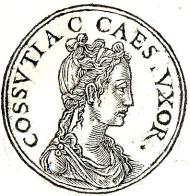
Cossutia was a Roman woman who became engaged to Julius Caesar prior to his reaching adulthood. There has been debate among historians on whether the marriage actually occurred.
Přečtěte si více...Gaius Iulius Caesar
Sempronia

Sempronia war eine römische Aristokratin der späten Republik. Sie war die Frau des Decimus Iunius Brutus, Konsul des Jahres 77 v. Chr., und nach Sallust aktive Teilnehmerin – zumindest Mitwisserin – an der catilinarischen Verschwörung.
Přečtěte si více...Gaius Iulius Caesar
Eunoë

Eunoé Maura (en berbère : ⴰⵡⵙⵏⵓⴼⴰ - Ausnufa) était une reine berbère de Maurétanie et épouse du roi Bogud.
Aussi connue sous le nom d'Euryes, Euries ou Eunoa.
Přečtěte si více...
Gaius Iulius Caesar
Clodia

Clodia Metelli, née Claudia vers 95 ou 94 av. J.-C. et appelée également Clodia, est une des femmes les plus connues du Ier siècle av. J.-C.
Elle est l’une des trois filles du patricien romain Appius Claudius Pulcher. Sa mère était, soit Caecilia Metella Balearica, soit sa cousine Caecilia Metella fille de Lucius Caecilius Metellus Diadematus. Clodia était la demi-sœur, entre autres, de Publius Clodius Pulcher et d’Appius Claudius Pulcher (consul en 54 av. J.-C.), qui avaient le même père mais pas la même mère.
Přečtěte si více...Gaius Iulius Caesar
Tertulla
Gaius Iulius Caesar
Nysa
Ниса (др.-греч. Νύσα) — дочь царя Вифинии Никомеда IV (по другим, видимо, устаревшим сведениям — Никомеда III), жившая в I веке до н. э.
Přečtěte si více...Gaius Iulius Caesar
Kleopatra VII.
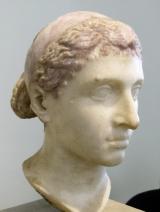
Kleopatra VII. Filopatór (69 – 12. srpna 30 př. n. l.), známá většinou jen pod jménem Kleopatra, byla egyptská královna pocházející z helénistické dynastie Ptolemaiovců, která byla řecko–makedonského původu. Protože se jedná o nejznámější Kleopatru, vyskytuje se v literatuře i pouze pod jménem Kleopatra, někdy Kleopatra Egyptská. Byla třetí dcerou krále Ptolemaia XII., kdo byla její matka, je nejisté, ale předpokládá se, že se jednalo o sestru Ptolemaia XII.
Přečtěte si více...