Kdo chodil s Gilbert Bécaud?
Janet Woollacott datováno Gilbert Bécaud od ? do ?. Věkový rozdíl byl 12 roky, 0 měsíců a 11 dny.
Brigitte Bardotová datováno Gilbert Bécaud od do . Věkový rozdíl byl 6 roky, 11 měsíců a 4 dny.
Gilbert Bécaud

Gilbert Bécaud, vlastním jménem François Gilbert Silly, (24. října 1927 Toulon – 18. prosince 2001 Paříž) byl francouzský zpěvák, šansoniér, hudební skladatel a herec, zvaný Monsieur 100 000 Volts (Pan 100 000 voltů), to pro jeho neobyčejně energický projev. Jeho největšími hity se staly písně Nathalie a L'important c'est la rose (česky známá jako Podívej, kvete růže, podívej) nebo Et maintenant (Co bude dál?) a další.
Přečtěte si více...Janet Woollacott

Janet Edith Woollacott (4 November 1939 – 13 November 2011) was a British-born French singer and dancer. She began dancing in the early 1960s, working on the Côte d'Azur, and launched her singing career in 1969. She released a few solo singles and later sang with the group Stone Age, alongside her fourth husband, Dominique Perrier. She was previously married to Claude François, Jean-Paul Barkoff, and Jean Sarrus. She also had a relationship of several years with Gilbert Bécaud, with whom she had one daughter, her only child. Woollacott died after a long illness on 13 November 2011.
Přečtěte si více...Gilbert Bécaud
Brigitte Bardotová
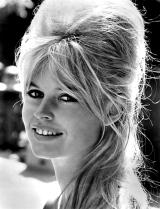
Brigitte Anne-Marie Bardot (French: [bʁiʒit anmaʁi baʁdo]; 28 September 1934 – 28 December 2025), often referred to by her initials B.B., was a French actress, singer, model, and animal rights activist. She became one of the best-known symbols of the sexual revolution and gained international fame for portraying characters associated with hedonistic lifestyles. Although she withdrew from the entertainment industry in 1973, she remained a major pop culture icon. She appeared in 47 films, performed in several musicals, and recorded more than 60 songs. She was awarded the Legion of Honour in 1985.
Born and raised in Paris, Bardot was an aspiring ballerina during her childhood. She began her acting career in 1952 and achieved international recognition in 1957 for her role in And God Created Woman (1956), catching the attention of many French intellectuals and earning her the nickname "sex kitten". She was the subject of philosopher Simone de Beauvoir's 1959 essay The Lolita Syndrome, which described her as a "locomotive of women's history" and built upon existentialist themes to declare her the most liberated woman of France. She won a 1961 David di Donatello Best Foreign Actress Award for her work in The Truth (1960). Bardot later starred in Jean-Luc Godard's film Le Mépris (1963). For her role in Louis Malle's film Viva Maria! (1965), she was nominated for the BAFTA Award for Best Foreign Actress. French president Charles de Gaulle called Bardot "the French export as important as Renault cars".
After retiring from acting in 1973, Bardot became an animal rights activist and created the Brigitte Bardot Foundation. She was known for her strong personality, outspokenness, speeches on animal welfare, and for her long-term support of far-right views. She was fined twice for public insults, and five times for inciting racial hatred for her criticism of Muslims in France and calling residents of Réunion "savages". She responded: "I never knowingly wanted to hurt anybody. It is not in my character [...] Among Muslims, I think there are some who are very good and some hoodlums, like everywhere." Bardot was a member of the Global 500 Roll of Honour of the United Nations Environment Programme and received several awards and accolades from UNESCO and People for the Ethical Treatment of Animals (PETA).
Přečtěte si více...