Kdo chodil s Polly Samson?
Heathcote Williams datováno Polly Samson od ? do ?. Věkový rozdíl byl 20 roky, 5 měsíců a 14 dny.
Polly Samson

Polly Samson (* 29. dubna 1962 Londýn) je britská novinářka a spisovatelka, manželka rockového kytaristy Davida Gilmoura. Samsonová je dcerou novináře Lance Samsona a spisovatelky Esther Cheo Ying čínského původu. Se spisovatelem Heathcotem Williamsem má syna Charlieho. V roce 1994 se provdala za Davida Gilmoura, kytaristu a zpěváka skupiny Pink Floyd, se kterým má dva syny (Joe, Gabriel) a dceru (Romany). Žije v Západním Sussexu.
Na albu Pink Floyd The Division Bell z roku 1994 je uvedena jako spoluautorka sedmi skladeb, podílela se především texty. Jako textařka spolupracovala se svým manželem rovněž na jeho třetím sólovém albu On an Island (2006), přičemž na některých skladbách i hrála na piano a nazpívala vokály. Otextovala píseň „Louder Than Words“ z alba Pink Floyd The Endless River (2014). Je také autorkou textů k pěti písním na Gilmourově albu Rattle That Lock (2015).
Samsonová vydala sbírky povídek Lying in Bed (1999) a Perfect Lives (2010) a romány Out of the Picture (2000), The Kindness (2015) a A Theatre for Dreamers (2020). Kratšími povídkami a příběhy přispěla do více knih.
Přečtěte si více...Heathcote Williams
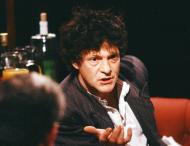
John Henley Heathcote-Williams (15 November 1941 – 1 July 2017), known as Heathcote Williams, was an English poet, actor, political activist and dramatist. He wrote a number of book-length polemical poems including Autogeddon, Falling for a Dolphin and Whale Nation, which in 1988 was described by Philip Hoare as "the most powerful argument for the newly instigated worldwide ban on whaling." Williams invented his idiosyncratic "documentary/investigative poetry" style which he put to good purpose bringing a diverse range of environmental and political matters to public attention. His last published work, American Porn was a critique of the American political establishment and the election of President Donald Trump; its publication date was the day of Trump's inauguration (20 January 2017). In June 2015 he published a book-length investigative poem about the "Muslim Gandhi", Khan Abdul Ghaffar Khan, Badshah Khan.
As well as being a playwright and screenwriter, Williams appeared in a number of independent and Hollywood films and was among the celebrity guests in the last episode of season 4 of Friends, '"The One With Ross's Wedding"'. He played Prospero in Derek Jarman's The Tempest (1979) and appeared in several "arthouse" films, including Orlando (1992), as well as the Hollywood film Basic Instinct 2 (2006). Al Pacino played the part of a Williams fan in a spoof arts documentary, Every Time I Cross the Tamar I Get into Trouble. Williams also wrote lyrics, collaborating with Marianne Faithfull among others.
Williams was a keen naturalist and discovered a new species of honey-producing wasp in the Argentine pampas, an event he recorded in a book of poems called Forbidden Fruit. Williams was a magician and a member of The Magic Circle. He wrote a TV play called What the Dickens! about Charles Dickens's penchant for performing magic shows. Bob Hoskins taught him fire eating. When he went to demonstrate his newfound talent to then girlfriend Jean Shrimpton, he accidentally set himself alight on her doorstep.
Williams was a leading activist in the London squatting scene in the 1970s and ran a squatters "estate agency" called the "Ruff Tuff Cream Puff". In 1977 he and a couple of hundred fellow squatters established the "state" of Frestonia in Notting Hill and declared independence from Britain. The then Shadow Chancellor, Geoffrey Howe, wrote to express his support and Williams was appointed UK Ambassador. Frestonia lasted almost a decade and had its own institutions and postage stamps.
Williams spray-painted graffiti on the walls of Buckingham Palace as a protest against the Queen signing Michael X's death warrant while there was no capital punishment in the UK. In the early 1970s, his agitational graffiti were a feature on the walls of the then low-rent end of London's Notting Hill district. The final paragraph of Williams' New York Times obituary summed up his philosophy: "If poetry isn't revolutionary, it's nothing," he told Saira Viola from the web publication Gonzo Today in 2015. "Poetry is heightened language, and language exists to effect change, not to be a tranquilizer."
Přečtěte si více...